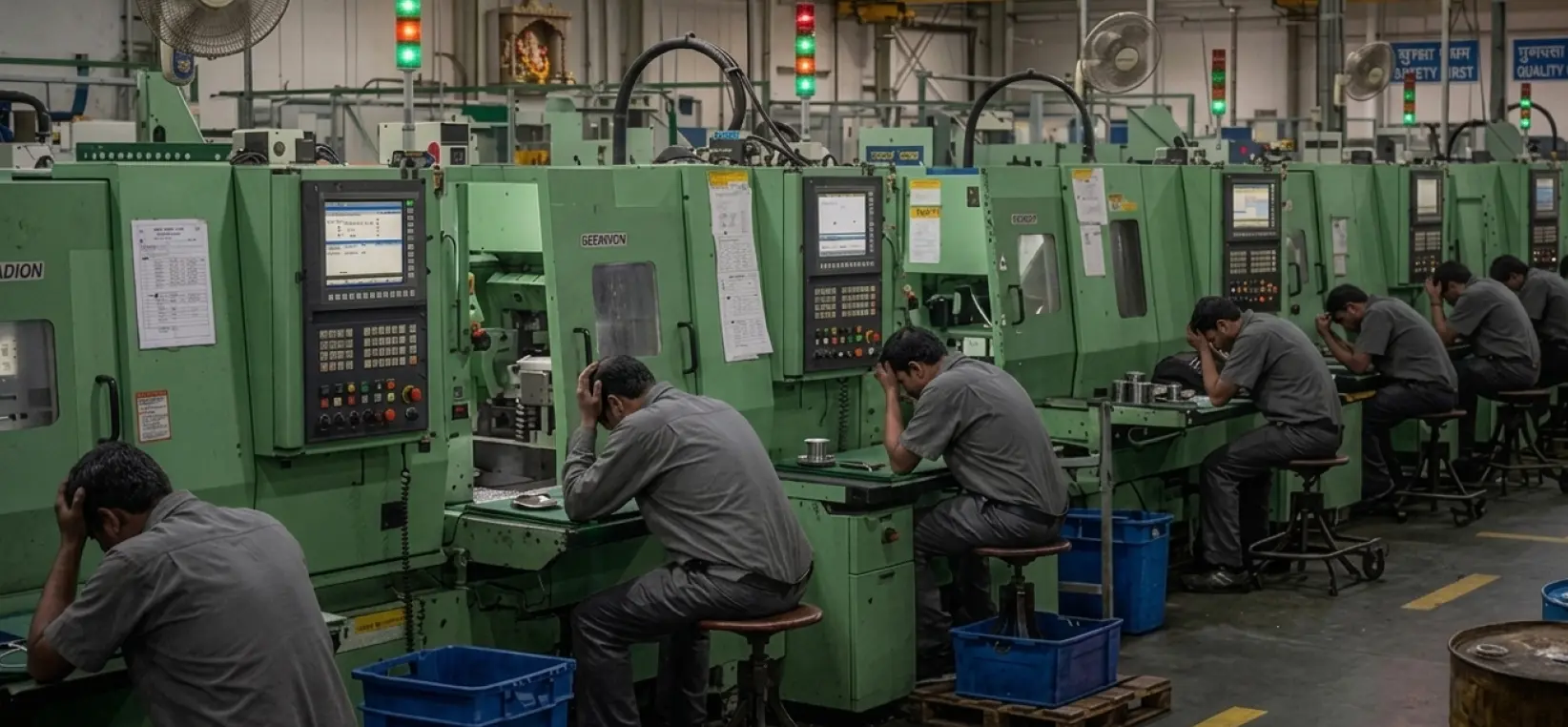
In industrial operations, downtime is rarely viewed as a power quality issue. It is more often attributed to equipment failure, process errors, or maintenance gaps. Yet, across industries and geographies, power-related disturbances remain one of the most common underlying contributors to unplanned shutdowns.
Power conditioning, when approached as a strategic design element rather than a reactive add-on, plays a decisive role in reducing downtime and improving total cost of ownership.
Downtime is more than lost production
The true cost of downtime extends well beyond lost output. It includes:
- Idle labor and rescheduling costs
- Scrap and rework
- Equipment stress during shutdown and restart
- Missed delivery commitments
- Reputational impact with customers
When power disturbances trigger downtime, these costs often repeat unpredictably, making them difficult to quantify and manage.
Power disturbances as a root cause
Voltage fluctuations, transients, and short-duration interruptions frequently act as the initiating event in a chain of failures. A brief voltage dip may cause a drive fault, which halts a machine, which disrupts an entire production line.
In many cases, the original electrical disturbance has already passed by the time troubleshooting begins. The visible symptom is a machine fault, while the invisible cause is unstable power.
Facilities that investigate these patterns over time often discover that power quality issues are not isolated incidents, but recurring contributors.
From component damage to system instability
Poor power quality does not always cause immediate failure. More often, it accelerates wear:
- Capacitors age faster
- Power supplies operate under stress
- Insulation weakens
- Thermal margins shrink
This degradation increases the likelihood of failures during peak operation, precisely when downtime is most costly. Power conditioning addresses this by maintaining stable operating conditions for downstream equipment, reducing cumulative stress over time.
The economic logic of power conditioning
From a procurement perspective, power conditioning equipment is sometimes viewed as an added cost. From an operational perspective, it is more accurately viewed as risk mitigation infrastructure.
Organizations that analyze total cost of ownership rather than purchase price recognize several economic benefits:
- Reduced frequency of breakdowns
- Lower maintenance intervention rates
- Longer equipment service life
- Fewer emergency repairs
- Improved predictability of operations
When these factors are quantified over years of operation, the return on investment becomes clear.
Reactive maintenance vs engineered prevention
Reactive maintenance focuses on restoring operation after failure. While necessary, it does little to address systemic vulnerabilities.
Engineered power conditioning, by contrast, reduces the likelihood of failure in the first place. It stabilizes input power, isolates sensitive loads from disturbances, and ensures that equipment operates within its intended electrical envelope.
This shift from reaction to prevention is a defining characteristic of mature industrial operations.
Power conditioning in complex facilities
Modern industrial facilities rarely operate a single type of load. CNC machines, automation systems, HVAC, testing equipment, and IT infrastructure often coexist within the same electrical environment.
Each of these loads interacts with the power system differently. Without proper conditioning, disturbances generated by one load can affect others.
Integrated power conditioning strategies account for these interactions, protecting critical loads while maintaining overall system stability.
The impact on maintenance planning
Stable power conditions enable more predictable maintenance cycles. Equipment failures caused by electrical stress are often sudden and difficult to forecast.
By contrast, equipment operating under stable conditions exhibits more predictable aging behavior. This allows maintenance teams to plan interventions proactively rather than respond to emergencies.
Predictability is a key contributor to lower total cost of ownership.
Reliability as a competitive advantage
In many industries, reliability is a differentiator. Facilities that experience fewer interruptions deliver more consistent quality, meet deadlines more reliably, and operate with greater confidence.
Power conditioning is rarely visible to customers, but its impact is felt through stable operations and consistent output.
Organizations that recognize this treat power quality as a strategic enabler rather than a background utility.
A long-term perspective on cost
Short-term cost savings achieved by underinvesting in power infrastructure often result in higher long-term costs. Equipment replacements, emergency repairs, and lost productivity quickly outweigh initial savings.
Power conditioning should be evaluated over the full lifecycle of the facility, not just the installation phase.
Conclusion
Reducing downtime and lowering total cost of ownership requires a holistic view of industrial power systems. Power conditioning plays a central role in this effort by stabilizing operating conditions, protecting equipment, and enabling predictable performance.
In the long run, the most cost-effective facilities are those that invest thoughtfully in power quality from the outset.