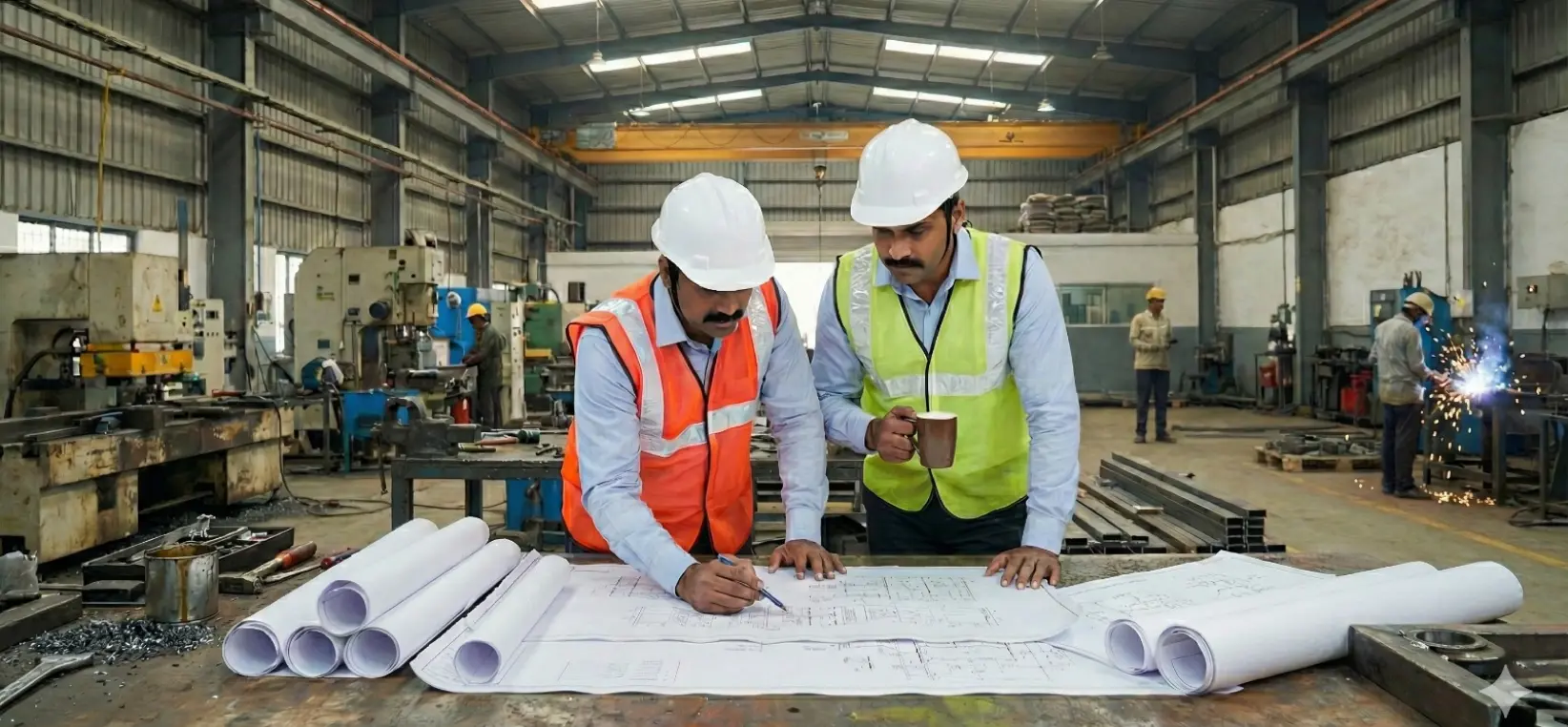
Reliability in industrial power systems is often discussed as an outcome, something measured after years of operation. In reality, reliability is determined much earlier, at the design stage.
Organizations with consistently reliable operations share a common trait: they treat reliability as a philosophy rather than a specification.
Reliability begins with assumptions
Every design is based on assumptions about load behavior, operating conditions, maintenance quality, and supply stability.
When assumptions are optimistic, systems may perform well initially but struggle under real-world stress. Reliability-focused design starts with conservative assumptions and prepares for deviation.
Designing beyond minimum requirements
Meeting minimum standards ensures compliance, not robustness. Industrial reliability requires designs that exceed baseline requirements in critical areas.
This includes:
- Electrical margins
- Thermal margins
- Mechanical robustness
- Environmental tolerance
These margins provide resilience when conditions deviate from expectations.
Simplicity as a reliability tool
Complex systems are not inherently unreliable, but unnecessary complexity introduces failure points.
Designs that favor clarity, modularity, and simplicity are easier to maintain and more forgiving of human error. This principle applies equally to electrical layouts, control logic, and mechanical assemblies.
Component selection matters
Reliability is influenced by the weakest component in the system. Selecting components based solely on cost often leads to premature failures.
Experienced manufacturers evaluate components based on:
- Proven field performance
- Operating margins
- Environmental suitability
- Supplier consistency
This disciplined approach reduces variability and improves predictability.
Testing for reality, not theory
Laboratory testing verifies functionality. Reliability testing validates endurance.
Systems designed for reliability undergo testing that reflects real operating conditions, including thermal cycling, load variation, and fault scenarios.
These tests expose weaknesses that would otherwise appear only after installation.
Feedback from the field
Field performance provides the most valuable data for improving reliability. Patterns observed across multiple installations reveal design vulnerabilities and opportunities for improvement.
Organizations that actively incorporate field feedback into design continuously refine their systems. This closed-loop approach distinguishes mature manufacturers from transient suppliers.
Reliability and maintenance alignment
Reliable systems are designed with maintenance in mind. Accessibility, diagnostics, and predictable wear patterns reduce dependency on perfect maintenance practices.
In real-world environments, maintenance quality varies. Systems that tolerate this variability perform better over time.
Reliability as a strategic asset
Reliable power systems enable reliable production. This translates into:
- Consistent output quality
- Predictable scheduling
- Lower stress on personnel
- Stronger customer confidence
Reliability is not merely a technical metric. It is a competitive advantage.
Long-term perspective
The most reliable systems are those designed with a long-term view. Short-term optimization often compromises longevity.
Organizations that prioritize lifecycle performance over initial cost build infrastructure that supports sustained growth.